Many people ask us why we don’t “create content” from our travels. You know, monetise that which we are already doing. Perhaps it’s because of this question that I feel the urge to start this blog with a small disclaimer. Or perhaps it’s simply to honour the voice of my own heart. Whatever the reason, here it is anyway…
Disclaimer: we are not influencers. Not that we have anything agains “influencers”. For us, it is okay if no one but our mothers read these words. We travel because we love it. We travel because it reminds us that we are not the centre of our universe. We travel because through it our small views of life, politics and different peoples are shattered. We travel because it humbles us every day. We travel because humility enables us to love people as they are, where they are. We are ever learning to embrace the extreme discomfort of true adventure. We travel simply and affordably and as close to the common people, living their actual lives in a place, as we can. We don’t see ourselves as tourists. We see ourselves as children on an adventure – figuring things out as we go. We love going to places and meeting the people there.
With all this said, here you are (mom, unless it’s you again!) somehow reading my words about a desert city in Algeria. My imagination dreamt up the idea that you are someone that is planning to explore this undiscovered country. You take the wild chance and type in a few key words, “Biskra” or “Algerian Sahara” or “Desert Oasis”. Up pops this post from July 2025 written by an expectant South African 30-year old woman. It’s in English! Finally, something about Biskra in English!
Wonderful, I am so glad you made it here! Now, let me tell you about Biskra.
We traveled to Biskra during the end of June 2025. Many people told us that we are crazy, since May to August are the months many people escape the scorching heat by traveling North to the coastal regions. We went anyway. If others can survive there for their whole lives then surely we could survive eight days! And how glad I am that we did go!
Though we’ve never really been the kind of travellers that opt for hotels, this time we stayed in a new hotel, and it was wonderful! The air conditioned room, breakfast and clean sheets every second day were such treats. Okay, the air conditioning was more than a treat, it was an absolute necessity! The hours between 12:00 and 18:00 are spent indoors, with the whole city slowing down to a lull because of the soaring temperatures. Hotel Cristal is perfectly located if you want to be submerged in the comings and goings of the local people. Step out during the cooler morning hours and you will find yourself surrounded with streets hosting a magnificent fresh produce market! Most of the time I was the only woman to be seen, but our friends assured us that it is completely acceptable for me as a foreign woman to be there in the market with my husband. Though my knees, shoulders and collarbones were always covered they told me that there wasn’t any need for me to cover my hair.
If you meander a little further on and cross the boulevard in front of the giant JB hotel, walk past its entrance towards the streets behind it until you find the colourful world and marketplace of the women! Here I freely browsed unaccompanied through endless shops filled with textiles and dresses and hats and everything pretty and girly.
Oh, and should you ever end up in Hotel Cristal, be sure to watch at least one sunrise from the roof – it is absolutely magnificent!
The nearest open-air space from the bustling market streets is Jardin du 5 Juliet 1962. Perhaps you will find it a bit neglected and tattered, but it still beams with story if you stroll through in the early evening and park yourself on a bench as a spectator to a group of eldery men playing boules. Take a moment to marvel with us at the fascinating confluence of Arabian Africa and the remainders of a society under French rule as “Salaam Aleikum’s” and “Alhamdulillah’s” are freely exchanged by the competent players of this old European game.
That, or you could just walk south-east from the park’s lower entrance and wander through the streets till you find a small open square jardin with a martyr’s statue and a makeshift tea house at the lower end. Sitting (most likely) on a shaded bench you will find a short and stubby man, enthusiastically waiting for your arrival. Lively and comfortable in his address, it seems fresh in his memory the days before the war when many tourists still walked in the streets of Biskra. Chances are good he will win you over for tea and have you seated at one of the few plastic tables that belong to the tea house. The tea will be insufferably strong and sweet, depending on what time of the day you stumble upon this meeting. Through quick and ceaseless French chatter he will insist on paying for the tea when you decide to leave, though his own cup he didn’t touch.
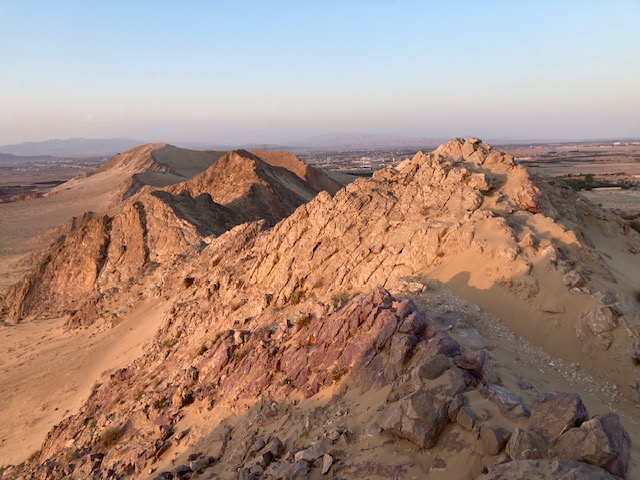
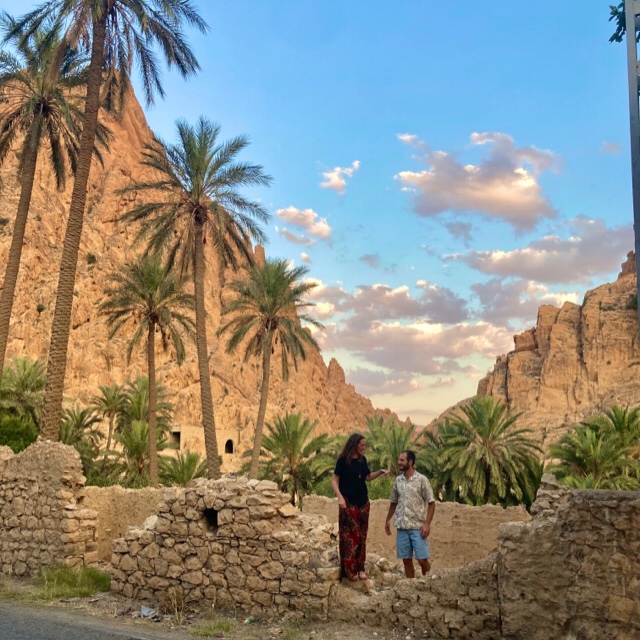
Biskra is widely known as the Gate to the Sahara. The actual “gate” is located about 50km north of the city just outside a town called El Kantara. This is a place you do not want to miss if you ever find yourself in this region. A winding road steering through a narrow gorge in the Atlas Mountains. With the high cliffs stretching up like enormous books leaning on a shelve this place is absolutely breathtaking. Not only is it a place of geographical significance, where the Southern Atlas mountains open up into the beginning of the Sahara desert, it is also a place with such historic wealth. El Kantara has been described as one of the most important caravan-stations in east Algeria and it barely takes any imagination to see the caravans of desert merchants on their camels pulling into this mountain oasis before continuing their journey north. You will find an arched bridge built by the Roman Empire in the first century AD spanning over the gorge, crossing the palm tree-lined riverbed below. Another remarkable reminder of the place’s historic and geographical significance is found on a French-built bridge just a few kilometres north of the gorge. Driving up from the south you can see an African woman facing you from the centre of the bridge. Driving down from the North you can see the face of another woman, but this time she’s European. Take note, plan your visit to El Kantara around sunset. You know, rocky gorges in desert places are seldom pleasant destinations anytime around noon. Be sure to take some money with to support a local family business by enjoying a glass of sweet tea and some freshly made mahjouba (typical Algerian tomato filled flatbread) at the makeshift restaurant just across from the Roman bridge.
Another place worth visiting is Ghoufi (pronounced Rhoufi by English tongues), a spectacular canyon 50km north east of Biskra. Being one of the bigger attractions in the region you will find ample information on the internet about this beautiful place, therefore I am not going to spend too many words on it. However, on the way from Biskra to Ghoufi our Algerian friends took us to a small gem of a place that I will expand on instead. In the small Amazigh (or berber) town of M’Chouneche there is a local pottery. I have no idea whether they have certain trading hours, but we arrived around 15:30 and found it open. Starting from the room where the artists are painting the earthenware, going all the way past the ovens and drying room to the shed outside where the raw clay from the nearby mountain enters the preparation process, we were given a tour by the manager. The small shop is incredibly well priced and such a good stop to stock up on some authentic souvenirs and affordable gifts! Be sure to go with a Shawi or Arabic speaker though, for French and English are especially scarce here!
The last place I’ll disclose is by far the most precious find for me! Being an artist and writer I am always on the lookout for quiet places of reflection and inspiration. I didn’t really expect to find such a place in Biskra, at least not during the scorching heat of summer. To my surprise Jardin Landon was all that and more! A place where Jason and I had to return to after we wandered through it the first time. This garden is much less glamorous and flashy than the newly developed family parks but I loved the absolute authenticity of the place. Here I could feel and see what it must’ve felt like to arrive at the small oasis settlement that Biskra was before it became a city. A dense planting of palm trees casting solid shade over quiet benches while chattery Maillard duck make their way to and from the nearby pond. Flowering durantas lining the neat pathways, hosting fluttering monarch butterflies all over! Queen Anne’s lace covering patches of dry earth as chorusses of cooing doves replace the man made sounds of the surrounding city. Go there, but don’t rush. Take your journal and your time…
For us the beauty of places are almost always tied up in the people we meet there. More than the stories and the photos – it is the friends we make that we carry with us wherever we go! Youcef, how glad we are that our search for a SIM card introduced us to you and Nihad! We love that we get to call you friends! Sofiane and Fouzi, from swimming pool views and midnight gelato to the Algerian savanna and camel surprises, the two of you made our time all that it was. May you never stop chasing sunsets!
A few practical tips from our travels:
> Getting there: We took the train from Algiers to Biskra. In 2025 the price was around 2000 DZ per person for a first class private compartment, departing on Saturdays, Mondays and Wednesdays at 18:13 and arriving at 03:30 in Biskra. Expect the time of arrival to be later than stated. As a married couple we are glad to have paid the 1000 DZ extra for first class, since second class compartments are shared but grouped as “men’s” and “women’s” which means we would have travelled the 9 hours separated from each other.
> Accommodation: Don’t let the few available Airbnb’s in Biskra fool you into believing that the only other accommodation available is expensive hotels. On a previous visit we stayed in a youth hostel, or auberge de Jeunesse, that fitted our low budget perfectly. Yes, it wasn’t very clean and the communal bathroom was nothing to write home about but the home cooked meals and warm hospitality of everyone, from our fellow guests to the management team, made up for all and any discomfort!
> Water: The water from the taps is drinkable but quite salty. We drank bottled water and our friend Fouzi introduced us to the best tasting water by far! Look for the brand Aïn Bouglez.
> Taxi’s: since the city is quite large and the public transport options much less than in Algiers we made use of taxi’s on a few occasions. Look for a car with a “taxi” sign on the roof and signal it to stop. We paid 150 DZ to travel half the city’s length, one way.
Next blog: A collection of photos from Biskra